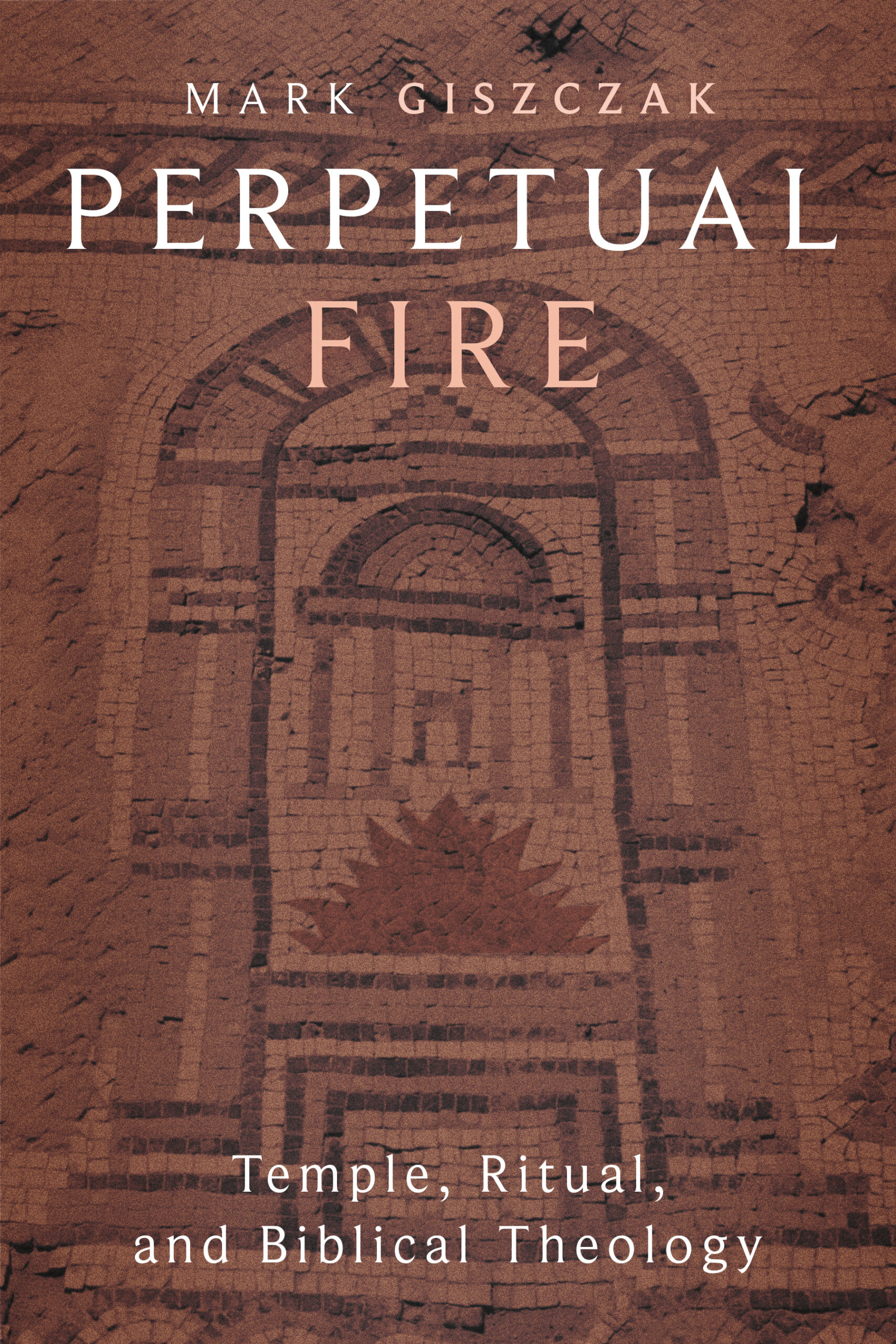
 I am very happy to announce the release of my new book: Perpetual Fire: Temple, Ritual, and Biblical Theology.
Ten Years in the Making
Years ago, I found myself intrigued by the many mentions of fire in the Bible, but most of all by the strange law mandating the maintenance of a perpetual fire on the altar of sacrifice: “it shall no go out!” (Lev 6:12). But why not? This question led me on a winding journey through many corners of ritual theory, biblical theology, temple history and even eschatology to produce this book. Why does Levitical law mandate that altar-fire be kept always burning? What does the fire symbolize? How was it understood in biblical times?
A Ritual Question with Theological Consequences
The book addresses two main ideas: 1) What is the ritual meaning of the ever-burning fire on the altar of sacrifice? and 2) What is the enduring theological significance of this fire? The first half of the book explores the ritual question, while the second half works toward a constructive biblical theology of the sacred fire. It turns out that a long and complex development of ritual symbols undergirds the Transfiguration scene, Jesus’ words about fiery judgment and fiery assimilation to divine life, but also St. Paul’s theology of resurrection. The perpetual fire on the altar has a significant theological afterlife in the New Testament.
Table of Contents
I wanted to give you a sneak preview of what’s in the book, so here’s the Table of Contents as you will find it
- Acknowledgements
- Abbreviations
- Introduction: A Fire Moving Through Time
- Part I – Ritual Fire
- 1 The Fire and the Second Temple: A Crisis of Legitimacy
- 2 The Origin of the Fire on the Altar: Law and Tabernacle, Tradition and Influence
- 3 The Cultic Fire: Function and Representation
- 4 The Wood Offering: Maintaining the Unquenchable Fire
- 5 The Sin of Kindling Fire: Violating the Boundaries of Cult
- Kindling: Preliminary Conclusions
- Part II – Theological Fire
- 6 The Brightness of God’s Body of Fire: Darkness, Theophany, Radiance
- 7 The Fiery Son of God: Jesus and the Restoration of Adam
- 8 The Body of Glory: Paul and the Transformation of Believers
- 9 The Fire of the Word: Torah and Revelation
- 10 The Fire of Encounter: Purification, Punishment, Vision
- Conflagration: Final Conclusions
- Bibliography
- Index
When Will the Book Be Released?
The book will come out on September 1, 2026 from Baylor University Press. I am grateful for BUP’s partnership in putting this together. Their editorial guidance and production process has improved the book and prepared it for this moment. You can pre-order the book now from these sites:
- Baylor: https://www.baylorpress.com/9781481323222/perpetual-fire/
- Amazon: https://a.co/d/0fAP2Lua
- Barnes & Noble: https://www.barnesandnoble.com/w/perpetual-fire-mark-giszczak/1150303521?ean=9781481323222
- Walmart: https://www.walmart.com/ip/Perpetual-Fire-Temple-Ritual-and-Biblical-Theology-Hardcover-9781481323222/20312758652?sid=a77cbf40-8d5b-4a0c-aa00-deb0a82a4fef
- Booksellers.ca: https://www.booksellers.ca/books/perpetual-fire-temple-ritual-and-biblical-theology-9781481323222
My Hopes for the Book
I hope that you will enjoy reading Perpetual Fire! Beyond that, I hope that it will give scholars and serious Bible students alike a new appreciation for the depth of ritual symbolism, the centrality of the altar fire in the cultic thinking of the Old Testament and the theological thought of the New. I hope that it will bring about a reappraisal of certain stock images from biblical vocabulary–whether fire, brightness, “unquenchableness,” radiance, darkness, and the meaning of biblical metaphors for punishment. It draws lines of connection from Levitical law all the way through to the final resurrection of the dead.